

UBER USER SAFETY:
FROM SOS TO A SAFETY CITY
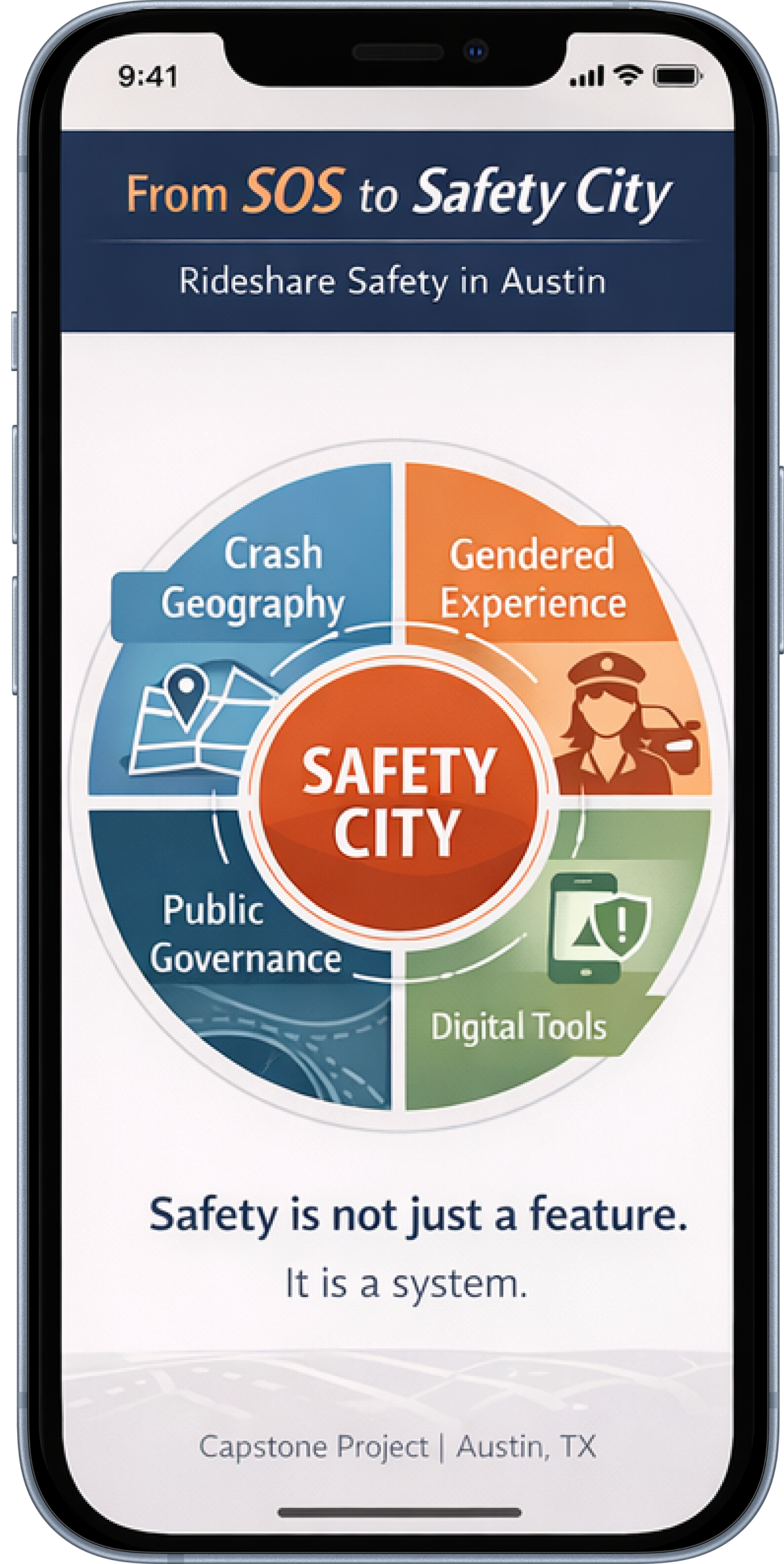
Rethinking Uber Safety — From Reactive Features to System Design
UX Research • Product Strategy • Interaction Design
Timeline: 12–16 weeks
Design Role: UX Researcher, Product Strategist
Project Description:
Evaluating Uber’s emergency features through interface testing, user research, and urban crash data to understand why drivers still feel unsafe. The project reveals how multi-step safety workflows and lack of environmental awareness create friction, and introduces the Safety City Framework as a system-level approach to improving rideshare safety.
Overview
Safety City: Rethinking Uber Driver Safety
Project Description:
This project explores how rideshare safety is experienced in real-world urban environments, focusing on Uber’s emergency features such as SOS and crash reporting. While these tools are designed to protect drivers, many still report feeling unsafe.
Instead of treating safety as a feature within an app, this project reframes it as a system-level problem shaped by roads, people, and public infrastructure.
PROBLEM STATEMENT
Uber’s safety tools are designed for emergencies, but most risks occur earlier as drivers navigate high-risk roads, unfamiliar areas, and unpredictable passenger situations. At the same time, these tools remain hidden and are only activated in extreme cases, creating a disconnect between real-world risk and digital response.
Hypothesis
The solution is to move safety from reactive, app-based features to a proactive, system-level approach. By integrating real-time crash data, driver context, and public infrastructure into the rideshare experience, safety can be supported before incidents occur—not just during emergencies. This approach is defined through the Safety City Framework.
Safety concerns are not rare—they are part of everyday driving.
58.6% of users experienced or witnessed a safety issue
69% do not believe app-based safety tools prevent unsafe situations
At the same time, crash data from Austin shows that traffic harm is not random, but concentrated along high-injury corridors such as I-35 and Riverside.
Drivers are navigating known risk zones, but the app does not reflect that reality.
Research Approach
I used a mixed-methods approach to understand safety from multiple perspectives:
Interface Testing
Analyzing Uber’s emergency workflows step-by-stepSystem Comparison
Comparing Uber’s safety model with public transit systems (CapMetro)
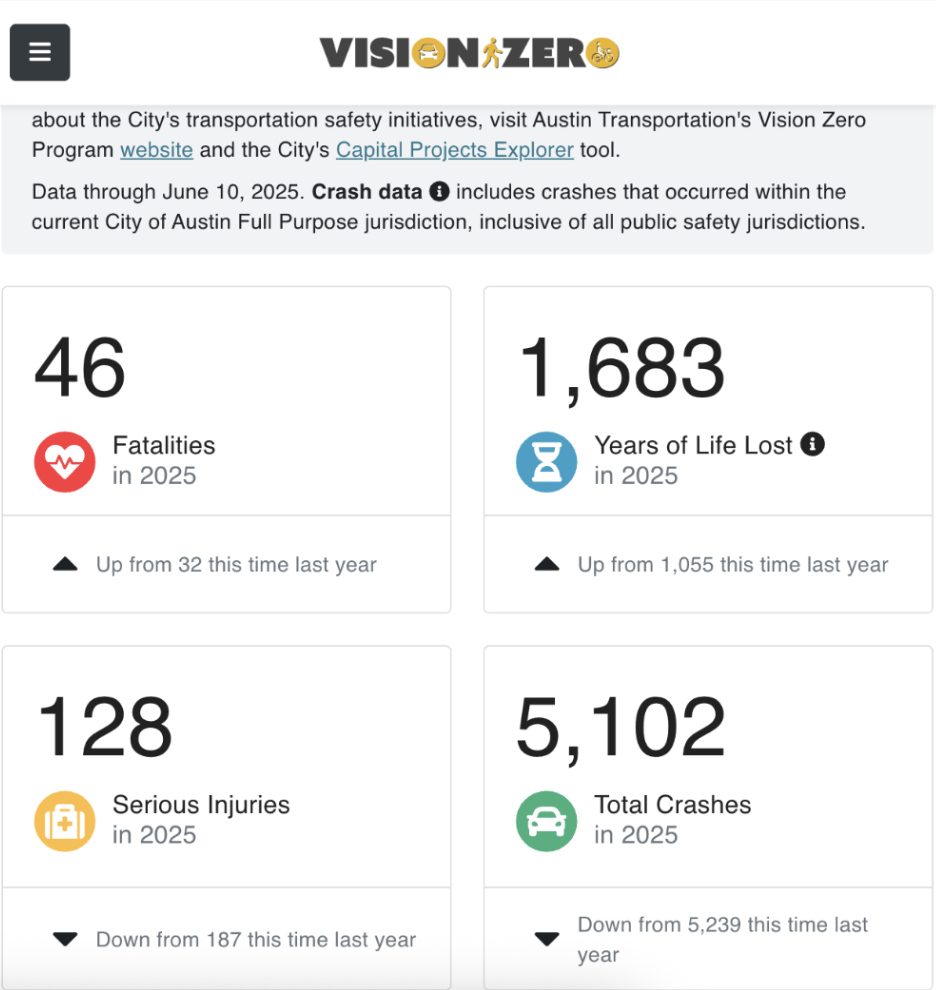
Crash Data Analysis
Mapping high-injury corridors using Austin’s Vision Zero data
Traffic fatalities, serious injuries, and total crashes in Austin, 2025.
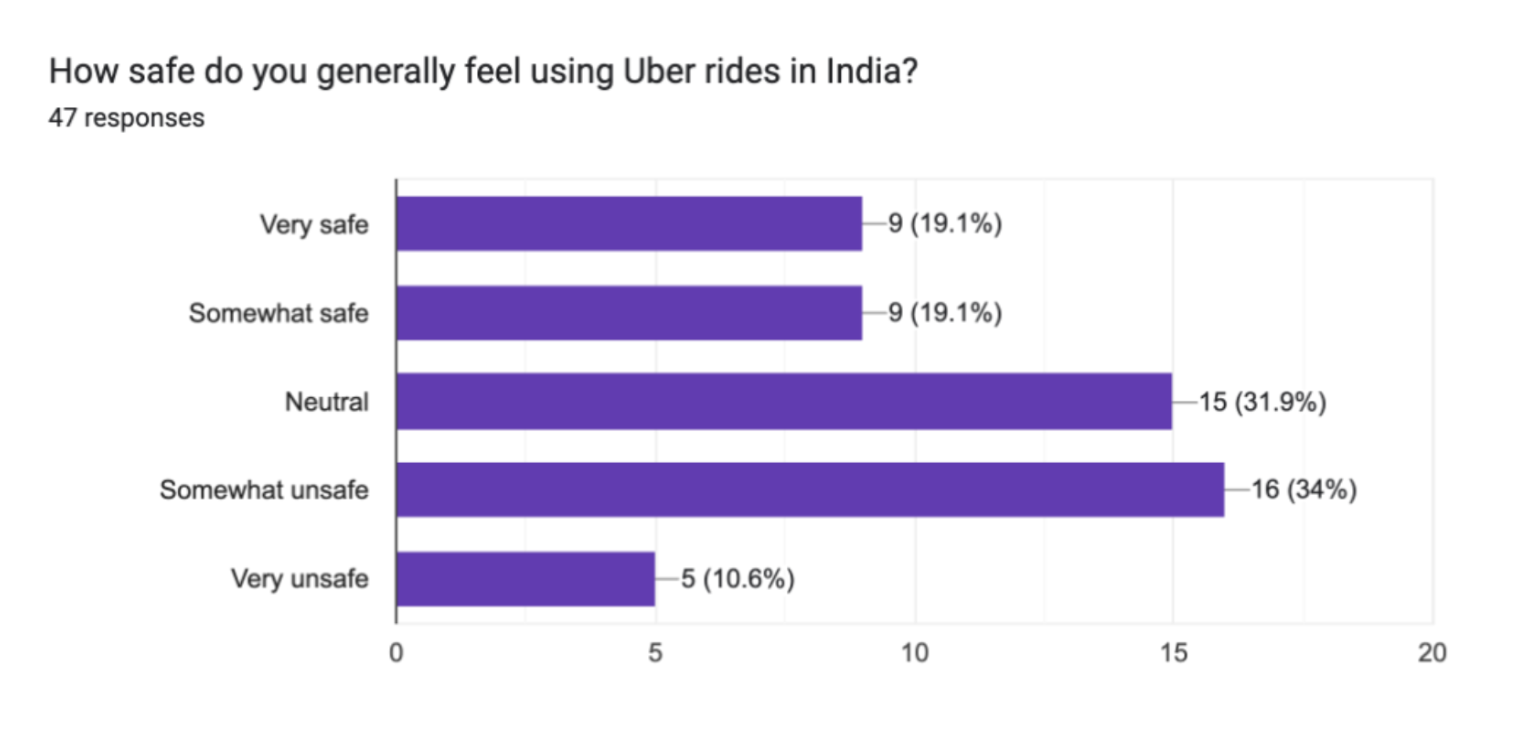
Surveys & Interviews
Collecting driver and rider experiences in Austin and India
Perceived safety using Uber in India (n = 47).
UX Findings (Interface Reality)
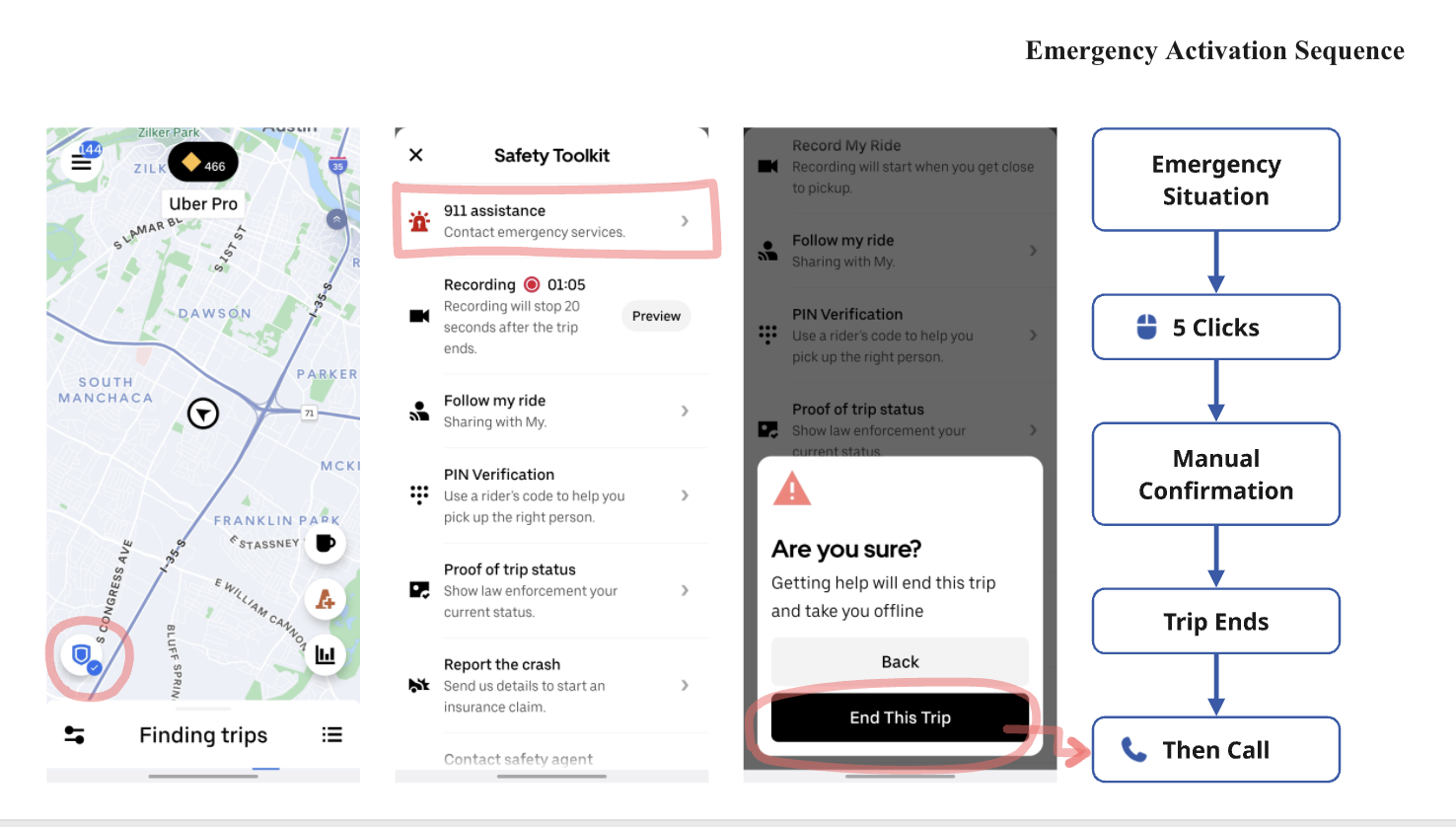
Testing the Uber driver app revealed that:
Emergency actions require multiple steps (5–6 interactions)
Safety tools are buried under layers of navigation
Features are designed for accuracy, not speed
While this reduces accidental activation, it increases friction during high-stress moments.
Key takeaway:
Safety is designed as a reaction, not as continuous support.
The Solution — Safety City Framework
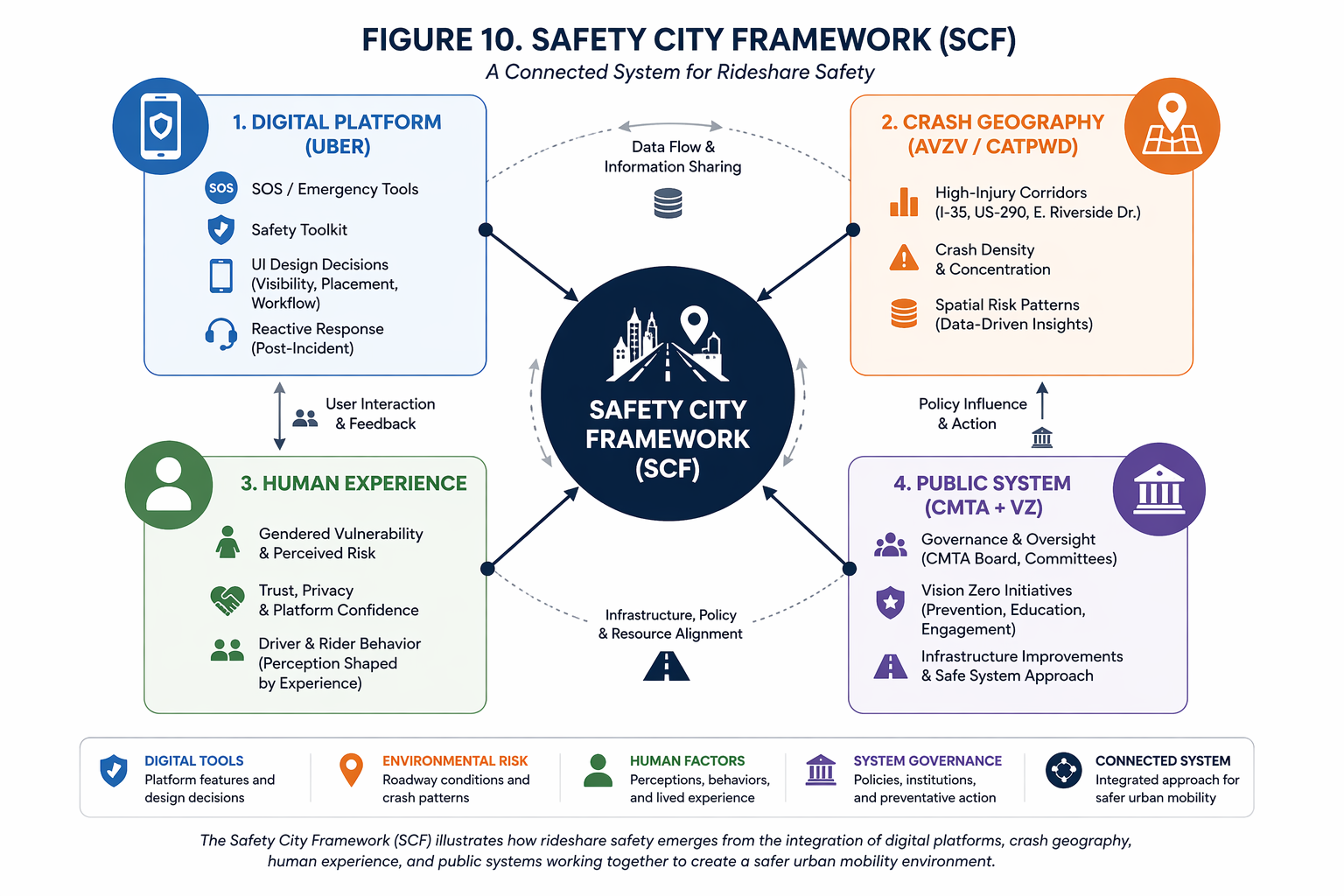
What the Framework Does
The Safety City Framework connects four key layers:
🚗 Digital Tools (Uber interface + safety features)
🗺 Crash Geography (high-risk road environments)
🧍 Human Experience (driver perception, gender, trust)
🚌 Public Systems (policy, infrastructure, transit planning)
Instead of isolating safety within an app, this framework shows how safety is created through the interaction of these systems.
Safety becomes proactive, not just reactive
Impact
This approach shifts safety from: Emergency-only tools → continuous, system-aware design
It opens opportunities for:
geofenced safety alerts
real-time risk awareness
better integration with city data
more inclusive, gender-aware design
Reflection
This project expanded my understanding of UX beyond screens.
It showed that:
interface decisions affect real-world outcomes
safety is shaped by systems, not just features
design can connect digital tools with physical environments